Bioactive Crested Gecko Enclosure Setup
How to set up a bioactive enclosure for a crested gecko: enclosure size, drainage, substrate, plants, cleanup crew, humidity, temperature and lighting.
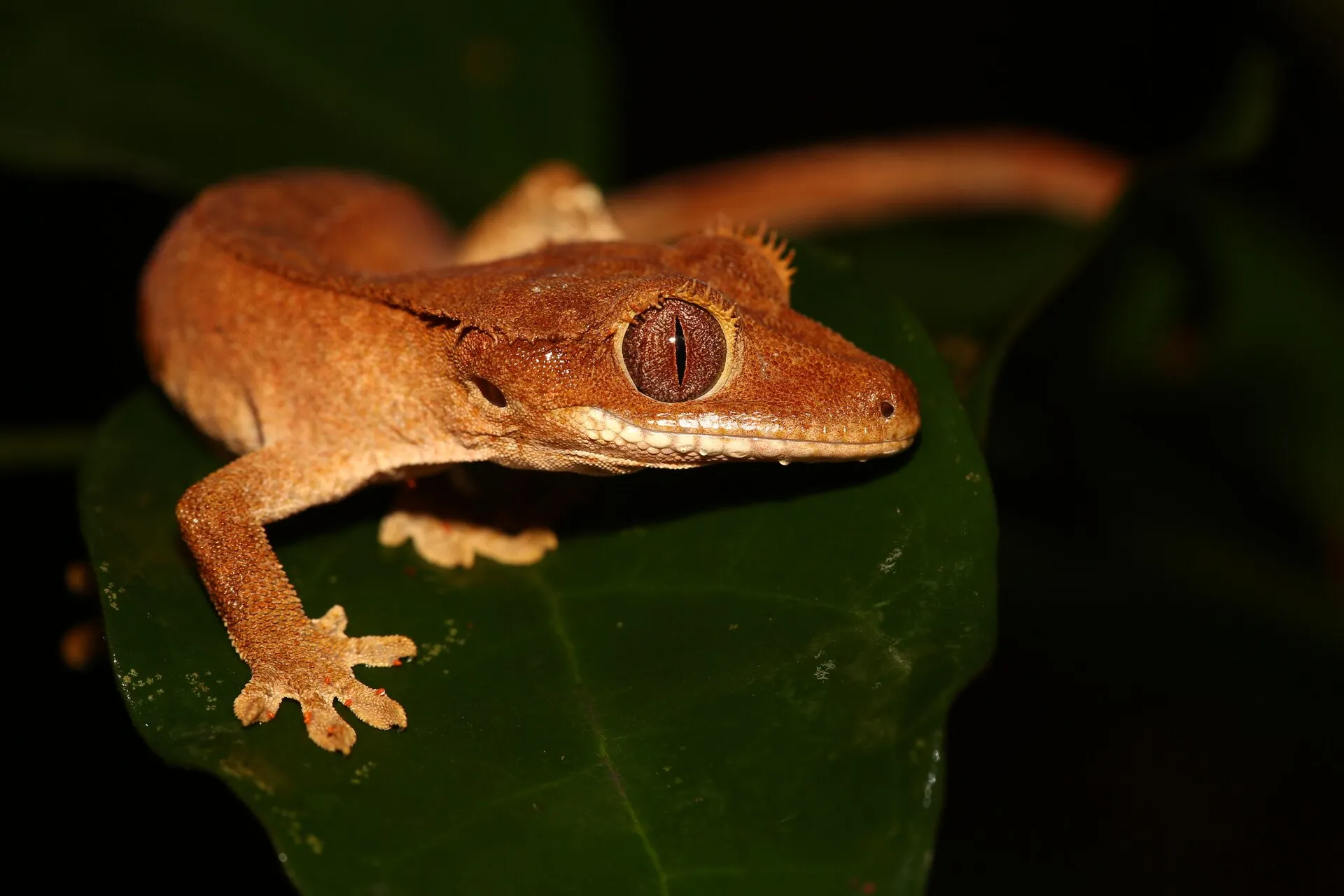 Photo: Lennart Hudel, CC BY 4.0
In this guide
Short answer: crested geckos (Correlophus ciliatus) are well suited to bioactive enclosures. For one adult, a tall enclosure of 18 × 18 × 24 in is often cited as the minimum, and many current care guides recommend 18 × 18 × 36 in or larger. Build it with a drainage layer, tropical bioactive substrate, sturdy plants, lots of branches and cork, and a cleanup crew of isopods and springtails. Keep temperatures around 72–78 °F (22–26 °C) and let humidity rise after misting and dry down between mistings.
Enclosure
Crested geckos are arboreal: they climb and spend most of their time off the ground. Height matters more than floor space.
| Gecko | Enclosure |
|---|---|
| Juvenile | Around 12 × 12 × 18 in up to 18 × 18 × 24 in, so it finds food easily |
| One adult | 18 × 18 × 24 in (45 × 45 × 60 cm) as a minimum |
| Recommended for adults | 18 × 18 × 36 in or 24 × 18 × 36 in, giving more climbing height |
Front-opening glass or PVC enclosures make planting and maintenance easier.
Layers
Follow our step-by-step setup guide. For a crested gecko:
- Drainage layer: about 1–1.5 in of clay balls
- Mesh barrier
- Tropical bioactive substrate: 3–4 in. See our substrate mix recipe
- Leaf litter on top
Use the Substrate Calculator with your enclosure’s floor size.
Hardscape and climbing
- Branches running diagonally and horizontally at different heights
- Cork bark tubes and flats as hides
- A few broad leaves or ledges near the top where the gecko can rest
Anchor everything firmly. Crested geckos jump, and loose decor can fall.
Plants
Choose sturdy plants that can handle a gecko climbing on them:
- Pothos (Epipremnum)
- Bromeliads
- Dracaena and similar upright plants
- Creeping fig for the background
- Ferns in shadier, lower areas
Avoid fragile, small plants at the top. They’ll get flattened.
Cleanup crew
Crested geckos eat a fruit-based diet that can leave sticky residue, so a strong cleanup crew helps a lot.
- Springtails for mold and small food residue
- Isopods such as powder blues/oranges or dwarf whites. See the best isopods for beginners
Temperature, humidity and light
| Typical target | |
|---|---|
| Daytime temperature | About 72–78 °F (22–26 °C) |
| Night temperature | Can drop to about 65–72 °F (18–22 °C) |
| Too hot | Avoid long periods above about 82 °F (28 °C); temperatures in the upper 80s °F can be dangerous |
| Humidity | Roughly 50–80%: higher after misting, drying down between mistings |
| Misting | Typically once or twice a day, adjusted to your enclosure |
| Lighting | LED plant light; many keepers also provide low-level UVB |
Heat is often the bigger risk than cold for crested geckos. Keep the enclosure away from windows and heaters.
Before your gecko moves in
Let the enclosure run for 2–4 weeks. Check that temperatures and humidity stay in range, plants have rooted and the cleanup crew is established.
Frequently asked questions
Can crested geckos live in a bioactive enclosure?
Yes. They’re one of the most popular species for bioactive setups.
What size enclosure does a crested gecko need?
18 × 18 × 24 in is the commonly cited minimum for one adult. Many care guides now recommend 18 × 18 × 36 in or larger, because height matters most.
Will my crested gecko eat the isopods?
It may eat some. That’s generally not a problem, but keep a separate culture so you can restock.
Do crested geckos need UVB?
They can survive without it with a supplemented diet, but many keepers and vets now recommend low-level UVB. Ask a reptile veterinarian.